To the beginner’s eye, surfing appears to be a very straightforward task. Paddle into a wave, stand up, and ride it. But learning to surf is about a lot more than standing up on a surfboard.
If you’re a beginner surfer, there are a few things you should understand before you get too far into your surfing journey. Some will help you progress faster. Others will help you stay safe, avoid unnecessary frustration, and maybe even earn a little respect in the lineup.
After years of teaching people how to surf, we’ve noticed that beginners tend to focus most of their attention on one thing: standing up.
And while that’s understandable, there’s a lot more to surfing than the few seconds you spend standing on your board.
In fact, one of the most important things we teach our students is that catching waves requires far more technical skill and understanding than simply riding them.
Understanding that distinction will change how you approach learning to surf.
Here are nine things we think every beginner surfer should know.
If you prefer listening to reading, Coach Evan and Coach Chris covered this topic in an episode of KookCast: Surf Education seen below.


1. Riding Waves is Easy. Catching Waves is Harder.
If you’re here to learn about surfing, the first thing you should know is:
Standing on a moving surfboard and riding a wave is actually pretty easy.
That’s why so many surf instructors hold their students’ boards and push them into waves. It allows someone with little or no surfing experience to stand up and ride a wave on their very first lesson. But that doesn’t mean they’ve learned how to catch a wave.
And there’s nothing wrong with enjoying that experience.
But here’s the catch:
Riding a wave is the easy part. Learning how to catch waves on your own is a lot harder. Especially when you have to deal with crowds, changing conditions, and an ocean that never stops moving.
Why Catching Waves Requires More Skill
Surf media is almost entirely composed of pictures and videos of people riding waves. So much so that we seem to forget the most impressive and challenging part of being a surfer:
You have to be skilled enough to catch those waves in the first place.
Think about what that actually requires.
As waves approach the beach, their shape, speed, and size are constantly changing. Wind, tide, and the contours of the ocean floor all influence how and where they break.
A surfer must continuously observe and evaluate those changes.
Then, using very basic and fundamental skills, they need to get themselves to the right place, with the right speed, at the right angle, and at the right time to catch the wave.
That’s a lot to coordinate.
And unlike the student being pushed into waves by an instructor, an independent surfer has to do all of it without assistance.
Learning to do that is what ultimately leads to the easy part of surfing: riding the wave.
And it all starts with your fundamentals.
2. Master Your Surfing Fundamentals
You need them. The stronger they are the better.
Every beginner surfer should spend time developing three fundamental skills:
- Paddling technique: Learning how to move yourself and your surfboard efficiently through the water.
- Board control: Learning how to maneuver, position, and maintain control of your surfboard in different situations.
- Stand-up technique: Learning how to transition from lying on your surfboard to standing on your feet.
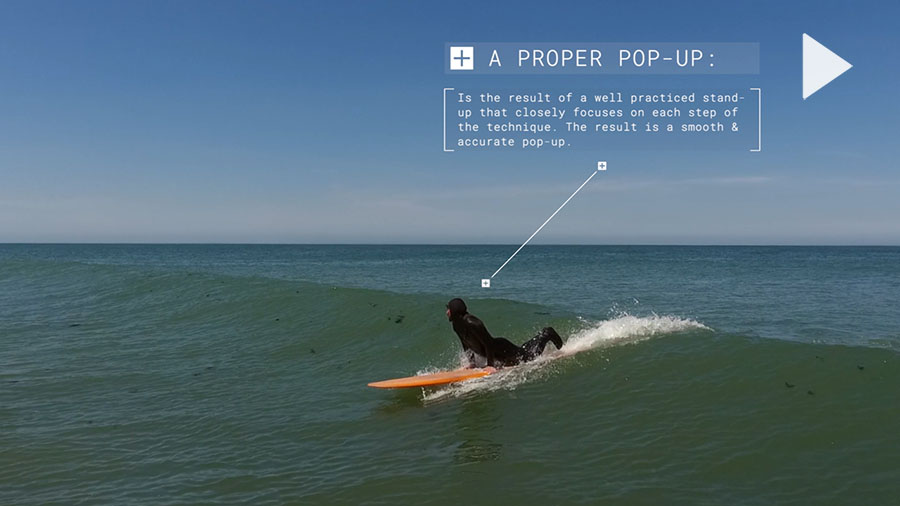
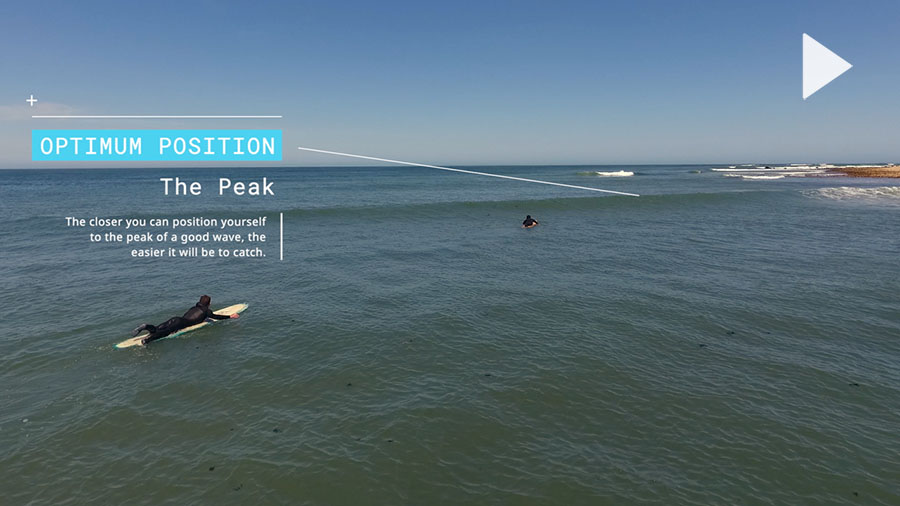
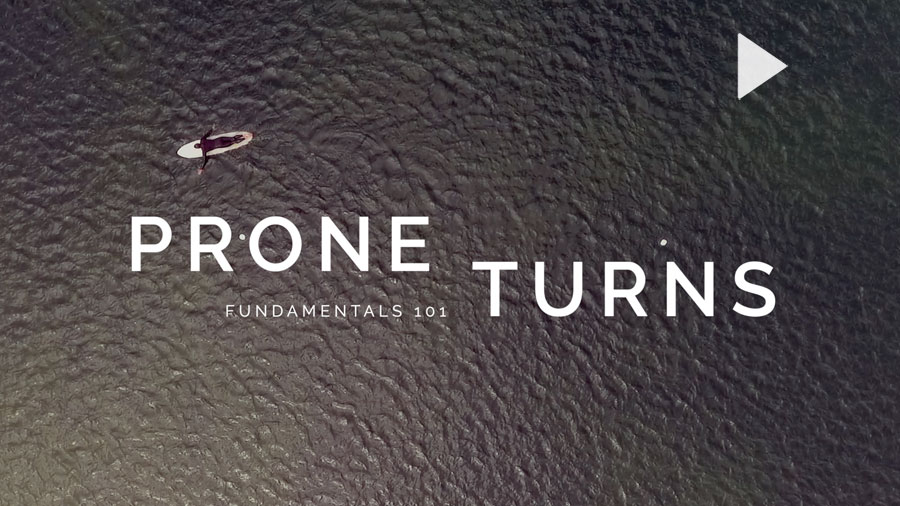
(Some featured images from our library of online videos)
These are the building blocks of surfing.
The better you become at each of them, the more capable you’ll be when it’s time to start catching waves.
Remember what we covered in the first point:
Riding waves is easy. Catching waves is harder.
The ocean is constantly changing, which means you can’t rely on every wave behaving the same way. What you can rely on are the skills you’ve developed through practice.
Strong fundamentals allow you to respond to those changes with greater confidence, efficiency, and control.
And here’s something worth remembering:
Surfing fundamentals aren’t just for beginners. They’re the foundation of mastery.
No matter how long you’ve been surfing, there’s always room to improve your paddling, board control, and stand-up technique.
You don’t graduate from the fundamentals. You continue refining them throughout your surfing life.
If you’re just beginning your journey, developing these three skills will give you a much stronger foundation for learning how to catch waves independently.
That’s why we place such a strong emphasis on fundamentals in The Surf Continuum.
We built an entire library of surf education around these skills, including instructional videos you can access with a free membership.
Explore The Surf Continuum’s surfing fundamentals lessons (free membership required)
3. Choose the Right Surfboard and Equipment
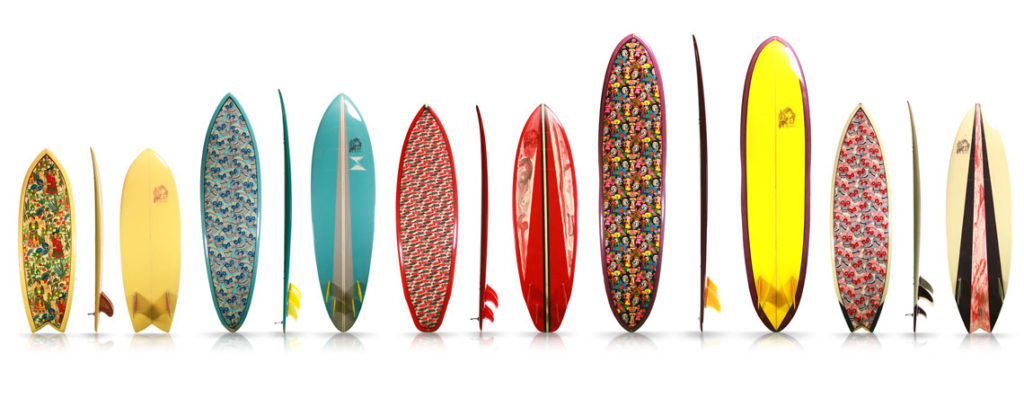
Choosing the right equipment can make learning to surf a lot easier. Choosing the wrong equipment can make an already challenging pursuit unnecessarily difficult.
And when it comes to surfboards, there’s no one-size-fits-all answer.
Surfboard
The ideal surfboard for you depends on your size, experience, abilities, and goals.
One of the most common pieces of advice given to beginner surfers is to simply get the biggest board possible.
We don’t necessarily agree.
A bigger surfboard generally provides more flotation and stability, which can make paddling and balancing easier when you’re just starting out.
But bigger isn’t always better.
As you begin developing your fundamentals, an unnecessarily large surfboard can make other important aspects of surfing more difficult. Carrying it, controlling it in the water, getting through whitewater, and taking off on steeper waves can all become more challenging.
The goal is to find a board that provides enough stability and flotation to help you learn without becoming unnecessarily difficult to control.
For many beginners, experimenting with boards in the eight-to-nine-foot range can be a reasonable starting point, depending on your size and circumstances.
But don’t assume that’s the right answer for everyone.
Before buying your first board, try borrowing or renting a few different options.
Talk to experienced surfers, knowledgeable surf shop owners, and qualified surf coaches. Ask other beginners with a similar build what they’re riding and how it’s working for them.
There’s a good board for you out there. Finding it requires a little diligence.
Wetsuit
If you live somewhere cold, don’t let the water temperature discourage you from learning to surf.
You just need the appropriate equipment.
The right wetsuit depends on your local water temperatures and the conditions you’ll be surfing in.
Talk to knowledgeable surfers or surf shop employees in your area about which wetsuit thickness and accessories are appropriate.
When it comes to wetsuit quality, we consider 00 BY XIIIG Wetsuits to be among the best available.
We’re proud to partner with Can’t Knock The Hustle, the company behind these wetsuits. Their emphasis on premium materials, thoughtful construction, and long-term durability aligns with what we value in surfing equipment.
A premium wetsuit isn’t necessary to start learning, but if you’re looking to invest in high-quality equipment, they’re worth considering.
Leash
Your surfboard leash is an important piece of safety equipment.
As a general starting point, choose a leash that’s as long as your surfboard.
Remember that a leash doesn’t replace proper board control. You should still make every effort to maintain control of your surfboard in the water.
Fins
Can we be honest with you?
Getting hung up on fins is a common beginner pitfall. The truth is, just about any conventional fin setup will work for the fundamental skills a beginner needs to learn and master.
Different setups can certainly affect how a surfboard performs, but you have much more important things to focus on when you’re learning.
Whatever setup you’re using, you’ll become accustomed to how your board responds.
Focus on developing your fundamentals before getting caught up in the finer details of fin design.
Roof Racks and Straps
Many beginner surfboards are too large to fit inside a vehicle, so you’ll need a safe way to transport yours.
Choose a rack and strap system that’s compatible with your vehicle and surfboard, and follow the manufacturer’s instructions for securing the board.
A properly fitted board bag can also help protect your surfboard during transport.
Always double-check that your equipment is secure before driving.
When strapping your surfboard on the roof using roof racks, the rule of thumb is to position it deck-down, with the fins facing upward and toward the front of the vehicle.
Surf Wax
Surf wax provides traction, helping your feet and body maintain contact with the board.
If you’re using a surfboard that requires wax (generally soft tops don’t need to be waxed), choose a product appropriate for the water temperature.
Start by applying a full bar of base coat, and top it off with a dusting of the same brand’s temperature-specific wax.
Not every beginner board requires the same treatment, particularly boards with textured or specially designed decks, so find out what’s appropriate for yours.
Get Advice Before Buying
We realize that walking into a surf shop can be intimidating when you’re brand new to surfing.
You’re presented with dozens of options, and you might not even know what questions to ask.
That’s normal.
Try to find a knowledgeable surf coach who will take the time to understand your size, experience, abilities, and goals before recommending equipment.
We hate to say it, but a surf shop employee’s expertise in surfboards doesn’t necessarily make them an expert in teaching people how to surf.
And even knowledgeable, well-intentioned shop owners can subscribe to the common misconception that bigger is always better for beginners.
Remember that our membership platform is designed around providing education and support to beginner and intermediate surfers.
Start with a free membership to explore our educational library, and consider upgrading to join our live calls and coaching sessions.
A little guidance before you buy can save you money, frustration, and unnecessary difficulty in the water.
4. Learn Where and When to Practice Surfing
location, location, location…
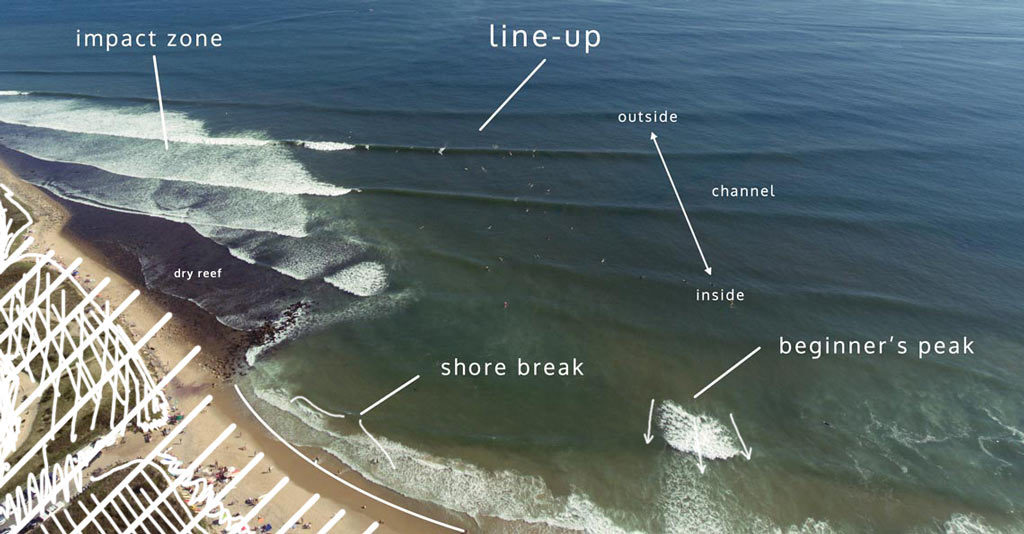
One of the questions we hear most often from beginner surfers is:
“Where should I practice surfing when I’m on my own?”
It’s a good question.
When you arrive at a surfing beach, the place where you see everyone catching waves is usually NOT the best place for you to start practicing.
But then where should you go?
How do you know whether a location is appropriate for learning to surf if nobody else is surfing there?
We understand how intimidating this can be, especially when you’re trying to develop your skills independently.
Here’s how we recommend approaching it.
Start in Still Water
If you’re completely new to surfing, we recommend beginning somewhere without waves.
That’s right. No waves.
A calm, protected body of water can be an ideal environment for developing your surfing fundamentals.
The purpose isn’t to ride waves. It’s to practice paddling and maneuvering your surfboard without having to constantly react to moving water and crowds.
Think about it.
Learning a new physical skill is challenging enough without introducing an unpredictable environment at the same time.
In still water, you can concentrate on the quality of your movements, identify your weaknesses, and repeat the same skills over and over.
You can also practice without feeling like everyone on the beach is watching you.
Find a location where paddling and swimming are permitted, the water is clean, and there are no dangerous currents, boat traffic, or other hazards. Practice with someone nearby rather than entering unfamiliar water alone.
You know what might be one of the best places to begin? A swimming pool.
Trust us on this one.
Spending a few sessions practicing your fundamentals in still water can pay you back tenfold when you’re ready to introduce waves into the equation.
Progress to Whitewater
Once you’ve developed some basic proficiency in your fundamentals, it’s time to start practicing in waves.
But there’s no need to paddle straight out to the lineup.
In fact, we recommend that beginners spend most of their early sessions practicing in whitewater near the beach.
Whitewater is the turbulent water created after a wave has already broken.
It’s a useful environment for learning how to apply your fundamental skills while dealing with moving water, while also removing the element of perfectly timing your take-off positioning into an unbroken wave at just the right moment of it’s development.
You can practice paddling, controlling your board, maintaining your balance, and even standing up while gradually becoming more comfortable with the energy of waves.
The key is choosing conditions appropriate for your ability.
Look for small, manageable waves with plenty of room to practice, and avoid crowded areas.
If the waves are consistently overpowering you or you’re unable to maintain control of your surfboard, the conditions are too challenging for your current skill level.
Head in and wait for a better day.
Remember, the objective isn’t to catch the biggest waves you can manage. Repetition is the key.
It’s to develop the skills that will eventually allow you to catch waves independently.
When You’re Ready, Progress to Unbroken Waves
After developing your fundamentals in still water and practicing them in whitewater, the next step is learning how to catch unbroken waves.
This is where your ability to read waves, position yourself, and paddle effectively becomes increasingly important.
But don’t rush it.
For beginners learning independently, we generally recommend keeping the waves around waist-high or smaller.
That’s a guideline, not a guarantee of safety. Every wave and every surf spot is different, and even a waist-high wave can be surprisingly powerful depending on where and how it breaks.
You should also look for a location with plenty of space and minimal crowding.
Beach breaks can be good options because they often have multiple peaks spread along the shoreline. Depending on the conditions, you may be able to find an area where you can practice without interfering with other surfers.
Point breaks are different.
Their more predictable breaking patterns can make reading waves and paddling out easier in some circumstances. Unfortunately, those same characteristics are what also attract crowds.
As a beginner, crowded point breaks generally aren’t appropriate places to develop your skills.
Point breaks aren’t necessarily off-limits to beginners, however. There are often sections of a point break that the crowd largely ignores.
Sometimes it’s the inside section closer to shore. Other times, smaller waves or less-than-perfect conditions discourage experienced surfers from paddling out.
Under the right circumstances, these areas can provide excellent opportunities to practice, provided the waves and surrounding hazards are appropriate for your ability.
Choose your practice location based on your abilities, the conditions, and the people around you.
There’s an important distinction between being a beginner surfer and being a kook.
A beginner understands their limitations and chooses a place to practice where they won’t interfere with other surfers. A kook, on the other hand, might paddle straight into a crowded lineup without the skills or awareness to navigate it safely, getting in the way and potentially causing collisions.
Being inexperienced doesn’t make you a kook. Failing to recognize your limitations and how your actions affect others is what will get you kook shamed at best.
At worst…well let’s just hope this warning helps you to avoid discovering the worst that can happen.
We explore this distinction further in our article, What Is a Kook?
And remember:
You don’t need bigger waves to become a better surfer. You need the right environment to practice the skills you’re trying to develop, and you need reps. Lots of them.
5. Learn Essential Safety Rules
Surfing comes with some inherent risks.
The rip currents, breaking waves, surfboards, other surfers…there are plenty of things that can hurt you if you’re not paying attention.
Fortunately, many common accidents can be prevented with a little knowledge, awareness, and good judgment.
One of the most important things we teach beginner surfers is to recognize the difference between situations they can handle and situations that exceed their current abilities.
Here are some fundamental safety principles to incorporate into your surfing practice.
Avoid Crowds
One of the biggest hazards for beginner surfers is the possibility of colliding with another surfer or their surfboard.
And it’s easy to understand why these situations happen.
When you’re learning to surf, you probably don’t know where to practice. So you head toward the area where everyone else is surfing.
Unfortunately, that’s often the wrong place to begin.
Without well-developed fundamentals, you might not have the skills necessary to quickly maneuver your surfboard, get out of someone’s way, or respond appropriately when things go wrong.
That makes crowded surf environments particularly challenging for beginners.
Whenever possible, find a suitable practice area where you can maintain plenty of space between yourself and other surfers.
That doesn’t mean you should surf alone in an isolated or unfamiliar location. Practice with someone nearby and choose conditions appropriate for your abilities.
We’ve met people who stopped surfing entirely after a frightening collision or even a close call with another surfer.
Don’t underestimate how much an experience like that can affect someone.
Give yourself the room you need to learn safely.
Maintain Control of Your Surfboard
Here’s one of our golden rules of surfing:
Always do your best to maintain control of your surfboard.
Your surfboard is a large, relatively heavy object moving through the water. When propelled by a breaking wave, it can become a serious hazard to you and anyone nearby.
Learning to control your board is therefore about more than improving your surfing.
It’s also about protecting yourself and other people.
As a beginner, you should generally be practicing in waves small enough that you can maintain control of your equipment.
If you’re constantly losing your board when waves hit you, that’s a strong indication that the conditions are too challenging.
It’s time to head in and wait for smaller waves.
Of course, losing control of your surfboard sometimes happens. No surfer can prevent every wipeout.
But if it’s happening repeatedly, don’t ignore the warning.
And remember, while you should make every effort to retain control of your board, don’t put yourself in additional danger trying to hold onto it in a situation where doing so is unsafe.
Your leash is a backup connection to your surfboard, not a substitute for developing proper board control.
Protect Your Head During Wipeouts
Sometimes, despite your best efforts, you’ll lose control of your surfboard.
When that happens, protecting your head should be a priority.
During a wipeout, you may be tumbled underwater, lose your sense of direction, or find yourself close to your own surfboard.
Develop the habit of bringing your arms up to protect your head when you fall or lose control.
Be particularly careful when returning to the surface. Your surfboard, another surfer’s board, or other hazards may be nearby.
Avoid rushing towards the surface after a wipeout. It’s safer to wait for the turbulence to ease.
Every wipeout is different.
The goal is to develop good protective instincts while practicing in conditions that don’t regularly overwhelm you.
Stay Calm
Regardless of your skill level, there will be times when you’re not in complete control.
That’s part of surfing.
You might get caught inside by a set of waves, lose your board, or find yourself in an unfamiliar situation.
Panicking generally makes these situations harder to manage.
It can cause you to waste energy, lose focus, and make poor decisions.
Practice remaining composed when things don’t go according to plan.
But staying calm doesn’t mean stubbornly remaining in conditions you can’t handle.
Recognizing when you’re in over your head and making the decision to return to shore is an important surfing skill in itself.
Understand the Conditions Before Entering the Water
One final safety principle deserves attention:
Don’t enter the ocean without taking time to understand the conditions.
Observe the waves before paddling out.
Pay attention to their size, how they’re breaking, the movement of the water, and any hazards in the area.
Learn about rip currents and how to respond if you encounter one.
Even if you exercise this advice, rip currents can appear where they weren’t before you paddled out. The most important thing you can do if you find yourself in a rip is to stay calm.
Panic is the beginning of a rapid downward spiral. Fatigue will quickly set in an bad decisions are made in this mindset.
A rip is not going to continue carrying you out to sea forever. If you do nothing, but tell yourself to stay calm you’ll be much better off than frantically paddling towards shore which of course is the worst response to recognizing that you’re in a rip.
Experiment with paddling in different directions parallel to the beach. Look for water that appears calmer and less agitated and fast flowing river like.
In the worst case, remain sitting on your board and wave both your arms in the air.
Learn more about rip currents.
When possible, choose a lifeguard-protected beach and ask the lifeguards about current hazards.
If you’re unfamiliar with a location, seek advice from knowledgeable local surfers or qualified instructors.
And don’t assume that because other people are surfing, the conditions are appropriate for you.
They may have skills and experience you haven’t developed yet.
The safest decision is sometimes to stay on the beach.
Knowing your limits is part of becoming a competent surfer.
6. Never Turn Your Back on the Ocean
This could have been included in our section on surfing safety, but it’s such an important lesson that we think it deserves its own spot on this list.
Never turn your back on the ocean.
We’ve witnessed plenty of accidents and close calls in the water simply because someone wasn’t paying attention to what was happening around them.
Waves can be a source of incredible joy, but they can also be a source of danger.
A breaking wave carries a tremendous amount of energy. When that energy propels a person or surfboard toward you, things can go wrong very quickly.
And you don’t necessarily need to be surfing to get hurt.
Even standing in shallow water near the shoreline, an unexpected wave can knock you off your feet before pulling you out into deeper water.
One of the most important habits you can develop as a beginner is to constantly maintain awareness of what’s happening around you.
Pay attention to incoming waves, nearby surfers, moving surfboards, and changes in the conditions.
Don’t become so focused on what you’re doing that you lose track of what’s happening around you.
Experienced surfers develop an almost constant awareness of their surroundings. They’re observing the ocean even when they aren’t actively paddling or catching a wave.
You should begin developing that habit from your very first session.
The ocean doesn’t care whether you’re ready for the next wave. Pay attention.
7. Understand How Waves and Conditions Constantly Change
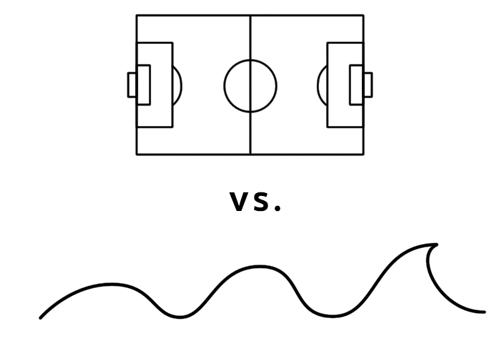
One of the most unique things about surfing is that our playing field is constantly moving.
Think about that for a moment.
Imagine how much harder a game of soccer would be if the field were constantly changing its shape, size, and angle.
Now throw in a moving net.
That’s surfing.
Our playing field never stops moving, and the way it moves is constantly changing.
Wind, tides, swell direction, wave period, and the contours of the ocean floor all influence how waves behave.
A surf spot can produce beautiful, predictable waves one day and completely different conditions the next.
Sometimes the conditions change significantly during the same session.
This is one of the reasons learning to surf is so challenging.
You’re not simply learning a collection of physical movements. You’re learning how to apply those movements in an environment that’s constantly changing.
And that requires observation, experience, and the ability to make adjustments.
Learn more about how to read waves and understand their behavior.
Some Days You’ll Surf Better Than Others
Even after years of surfing, we still experience sessions where everything seems to come together.
Our timing feels perfect. We’re reading the waves well, positioning ourselves correctly, and catching wave after wave.
It feels like we’ve got the ocean completely figured out.
Then we paddle out the next day, or sometimes even later that same day, and suddenly nothing seems to work.
Our timing is off. We’re out of position. We struggle to find the rhythm we had just a few hours earlier.
It’s almost like we’ve forgotten how to surf.
Sound familiar?
Here’s something every beginner should understand:
Your surfing ability hasn’t necessarily gotten worse just because you’re having a difficult session.
The environment may have changed, and your ability to adapt to those changes is still developing.
That’s normal.
In fact, learning to surf is partly about learning to manage the frustration that comes with inconsistent results.
You’ll have sessions that feel like a major breakthrough, followed by sessions that make you question whether you’ve improved at all.
Don’t let that discourage you.
Every surfer experiences some version of this, regardless of their ability.
Learn to Adapt
As you develop your surfing skills, you’ll gradually become better at recognizing how changes in the ocean affect your performance.
You’ll begin noticing which conditions suit your abilities, where waves are breaking, and how you need to adjust your positioning and timing.
This is another reason we place so much emphasis on fundamentals.
The stronger your fundamental skills become, the more capable you’ll be of responding to whatever the ocean presents.
But don’t expect every session to be better than the last.
That’s not how surfing works.
Learn to appreciate the good sessions, accept the difficult ones, and recognize that both are part of developing as a surfer.
Progress in surfing isn’t measured by how well you perform during any single session. It’s measured by the skills and understanding you develop over time.
8. Learn Where to Get Quality Surf Instruction
Learning to surf is challenging, but you don’t have to figure everything out on your own.
There’s an incredible amount of information available today, from instructional videos and podcasts to surf schools and private coaching.
The challenge is knowing which advice to follow.
And when you’re just starting out, that can be difficult.
Not All Surf Lessons Teach the Same Skills
One of the most important things to understand about surf instruction is that there’s a difference between helping someone get a ride on wave once and teaching someone how to surf for life.
We touched on this in the very first section of this article.
Many conventional surf lessons focus on getting students standing up and riding waves as quickly as possible.
That usually involves an instructor holding the student’s surfboard, positioning them, and physically pushing them into waves.
And while that can be a fun introduction to surfing, it doesn’t necessarily teach the student how to accomplish those tasks independently.
You need to understand how waves behave, where to position yourself, how to maneuver your surfboard, and how to put it all together to get yourself on the wave.
Those are skills that take time and practice to develop.
If your goal is to become an independent surfer, make sure your instruction is actually helping you develop the skills required to surf independently.
Finding a Good Surf Coach
Working with a knowledgeable surf coach can be one of the best ways to accelerate your progression.
A good coach can help you identify weaknesses, correct mistakes, and develop skills that might otherwise take years to figure out on your own.
But not all surf instruction is created equal.
Look for someone who emphasizes fundamental skills, explains the reasoning behind their instruction, and gives you opportunities to practice without constant physical assistance.
Your coach should be teaching you how to paddle, control your board, read waves, position yourself, and eventually catch waves independently.
Don’t be afraid to ask questions about their teaching methods.
And if your goal is long-term surfing proficiency, don’t be satisfied with an instructor who simply pushes you into waves over and over again.
The objective of good instruction should be to make you less dependent on your instructor, not more.
Learn With The Surf Continuum
This philosophy is the foundation of The Surf Continuum.
We are Coach Chris and Coach Evan, and we’ve dedicated years to developing an educational approach that helps surfers build the fundamental skills and understanding necessary for long-term progression.
Our membership platform includes instructional videos, live group calls, and resources designed to help you develop your surfing both in and out of the water.
You can start with a free membership and explore the educational library at your own pace.
For surfers looking for additional guidance, our paid memberships also provide opportunities to receive more personalized support through live calls and coaching sessions.
We also share surf education through our podcast, KookCast: Surf Education on Spotify, Apple Podcasts, and every other podcast platform covering the skills, techniques, and experiences involved in becoming a better surfer with a light hearted and comical approach.
And if you prefer reading, you can explore our free educational resources and articles throughout the website.
Whatever resources you choose, remember that watching videos and listening to advice are only part of the process.
You still need to get in the water and practice.
Good instruction can show you the way. Developing the skills is ultimately up to you.
9. Surfing Mostly Sucks
Hear us out.
Surfing is one of the most incredible and rewarding things you can do.
But let’s be honest. A lot of the time, it sucks.
Learning to surf is difficult. Progress comes slowly, and proficiency requires an enormous amount of practice, patience, and persistence.
There will be plenty of days when you paddle out full of excitement and come home feeling like you accomplished absolutely nothing.
You’ll miss waves you thought you could catch, make mistakes you’ve made a hundred times before, and watch other surfers make everything look ridiculously easy.
And sometimes you’ll wonder why you’re putting yourself through all of it.
Here’s the thing:
The difficulty is a big part of what makes surfing so rewarding.
If becoming a proficient surfer were easy, the achievement wouldn’t carry nearly the same meaning.
The skills you develop are earned through experience, repetition, failure, and the willingness to keep trying.
And that’s something to be proud of.
It Doesn’t Stop Being Difficult When You Get Better
One of the biggest misconceptions beginners have is that surfing eventually becomes easy.
It doesn’t.
You certainly become more skilled, more knowledgeable, and more capable of handling challenging situations.
But as your abilities improve, so do your ambitions.
You begin paddling into bigger waves, surfing more demanding conditions, and attempting things that would have seemed impossible when you first started.
In other words, as you get better, you tend to put yourself in increasingly difficult situations.
The challenges change, but they never entirely disappear.
That surfer you see effortlessly catching waves and making beautiful turns?
They experience frustration, too.
They’re simply dealing with a different set of challenges than you are.
No matter how good you become, there will always be something else to learn and someone who makes it look easier.
Learn to Enjoy the Process
If you’re constantly judging your surfing against people who are more experienced than you, it’s easy to become discouraged.
But remember that every proficient surfer was once a beginner.
They’ve experienced the same frustrations you’re dealing with, and they’ve made plenty of mistakes along the way.
The difference is that they kept going.
Instead of measuring your success solely by how many waves you catch or how well you ride them, pay attention to the skills you’re developing.
Maybe your paddling has improved.
Maybe you’re becoming more comfortable controlling your board in whitewater.
Maybe you’re beginning to understand where to position yourself to catch a wave.
Those improvements matter.
They’re the building blocks of surfing proficiency.
Learn to recognize them, appreciate them, and take pride in the process.
Because ultimately, becoming a surfer isn’t about reaching some imaginary point where everything suddenly becomes easy.
It’s about continuing to learn, improve, and challenge yourself.
So the next time you’re feeling discouraged, remember:
Surfing mostly sucks.
But that’s part of what makes it so damn good.
And hey, at least it’s better than sweating it out at the gym.
Last updated: October 28, 2026
Ready to Take Your Surfing Further?
Becoming a better surfer starts with stronger fundamentals.
Join The Surf Continuum for free and access instructional videos and courses designed to develop your fundamentals, improve your understanding of the ocean, and help you become a more independent surfer.
No payment required to get started.