Lesson Library

Explore surf lessons, coaching answers, live-session replays, and conversations designed to help you understand what to practice next.

All Lessons

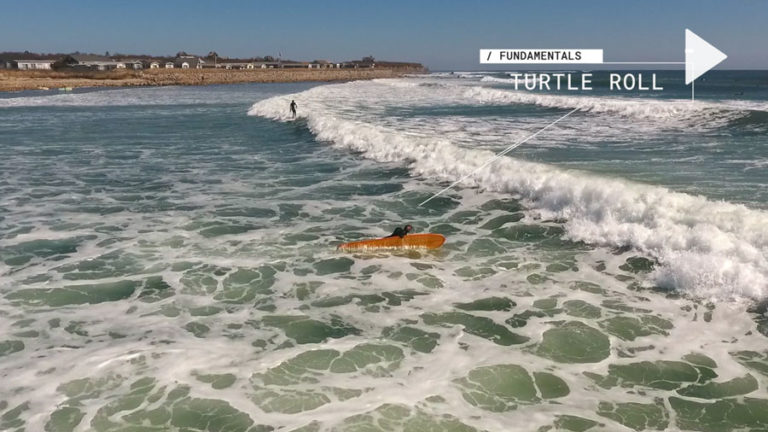
Jake is asking about duck diving long boards. Is that even possible? Well not for everyone, but the better you get at your technique, the less weight and strength it requires. Nonetheless, here’s my two cents on what it takes to burrow that big long board under a wave.
Taking-off on small waves is surprisingly tricky. While small waves may be less intimidating, the precision and accuracy required in your skills is much greater. In this video I examine a student’s small wave take-off and discuss how it can be improved in order to get the most joy out of a little wave.
Coach Chris recounts his best lesson ever with a student, and talks about how NOT standing up is often the best way to improve your stand-up. Coach Evan and Coach Chris also discuss their thoughts on the new rule at Cloud 9 disallowing beginner surf lessons.
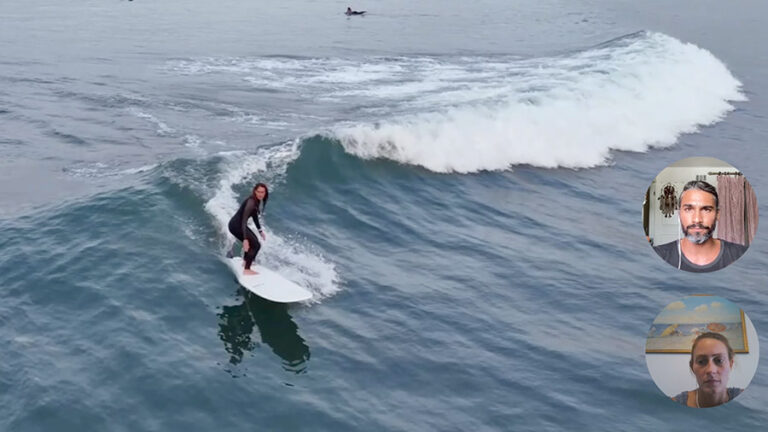
Steven surfs the Gold Coast which can be MEGA crowded, especially at the big name point breaks. So he opts to surf the beach breaks that are less crowded (good job finding your spot, Steven!) Here’s the thing…beach breaks have more free space, and point breaks are jam packed with surfers for a reason. Point breaks are easier to surf. Surfing a beach break requires some pretty quick, nimble, and proficient fundamentals. In this video, we get into the take-off and how that is the crucial, make-or-break moment, in determining whether you drive down the line in the pocket, or get caught behind the section and left in the flats.
Take-off angles are a subtle, but fundamental aspect of your take-off. But just because it’s a subtle element doesn’t mean it can’t be complicated to understand and implement. For every board and your position on the wave, angles must change to achieve the best result. And sometimes what seems right, suddenly changes due to the ever changing nature of waves. Years of practice is the only way to increase your ratio of success, but hopefully understanding them a little better will aid in your practice.
I’m pretty much obsessed with a great round house cutback. If you’ve ever drawn the perfect radius for the wave face you’re riding, brought it all the way around to the lip where the wave is just beginning to break, and rebounded perfectly off it and back down the line with more speed than you started with–then you understand where I’m coming from. I’ll spend the rest of my life trying to get better at them. They just feel so damn good. This video focuses on the first part of a proper round house cut back, the cutting back part. In a future video I’ll cover the second aspect of a good cut back, the re-entry.
Here’s an in depth look at how a surfer is great aside from how they ride the wave; which of course is also excellent, but without a solid fundamental foundation, the resulting surfing on the wave wouldn’t happen.
The second element to having a great paddling technique is your form, as in, how you lay in good position. Legs spread, or head down low are two frequent flaws seen in poor form. However, when you pair an engaged and well postured form with good position on your board, you’re well on your way to becoming an excellent paddler that costs you little effort.
Gus reached out with a question on how to improve his back hand. Spoiler alert: There is no secret sauce, but hopefully a few of these points help you practice with the right mindset so you can get your back hand equally as strong as your front hand.

Recommended Focus

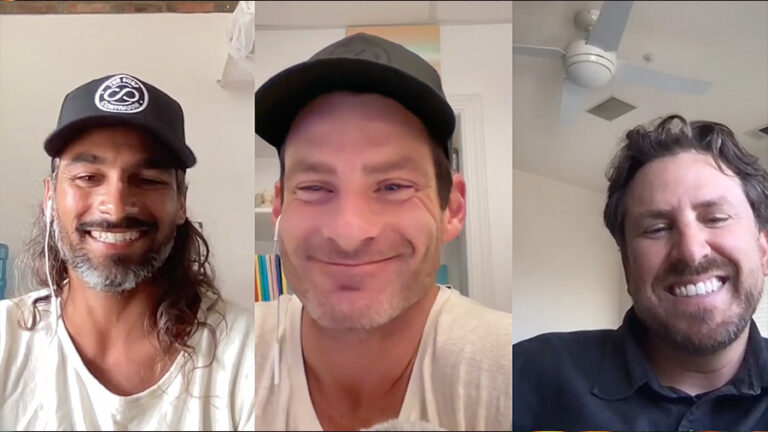
Coach Chris and Coach Evan are joined my Mind the Surf creator, Andrew Hapke to discuss The Art of Missing Waves in their second live session ever. Check your emails from us to learn more about upcoming live calls.